
Independent Systems.
One Operating Environment.
We architect and integrate the systems organisations run on — business platforms, payment flows, physical infrastructure like parking and access systems, and national-scale data exchange for sectors where failure is not an option.
When Systems Don't Talk, People Become the Interface
Most integration problems aren't tool problems — they're architecture problems. Data that should move automatically moves by hand, and the organisation absorbs the risk. These are the patterns we're brought in to fix.
Systems That Don't Speak
A permit is issued in one system, but the barrier, enforcement platform, or payment backend never hears about it. Staff bridge the gap by hand — and every manual bridge is a failure point.
Legacy Systems Without Interfaces
Critical data sits in an application the vendor no longer extends. Every export is manual, every workaround undocumented, and replacing the system outright is not an option this budget year.
Point-to-Point Spaghetti
Each new system was wired directly to the ones before it. Nobody can change one interface without breaking three others, and the knowledge of how it all connects lives in someone's head.
What We Integrate
Enterprise & Business Platforms
ERP, CRM, finance, HR, and operational systems synchronized through APIs, middleware, and event-driven flows.
Payment & Billing Systems
Payment providers, terminals, invoicing, and settlement — with automated reconciliation instead of end-of-month surprises.
Physical Infrastructure
Parking systems, barriers, ANPR cameras, access control, and sensors connected to the platforms that issue permits and collect payments.
Legacy Systems & Databases
Existing applications wrapped in secure, documented APIs — or connected through database-level and file-based exchange where that's the honest answer.
Government & Partner Data Exchange
Scheduled and event-driven exchange with registries, partner organisations, and reporting obligations — with audit trails built in.
Monitoring & Operations
Centralized logging, alerting, retries, and reconciliation reports, so a failed message is caught by the system — not by a citizen complaint.
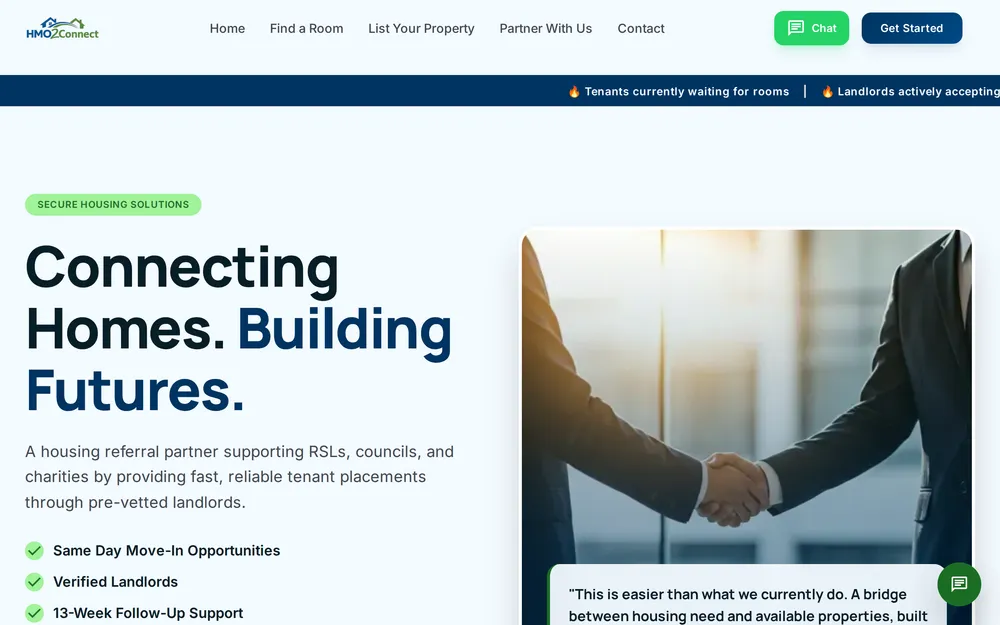
Case Study: HMO2Connect
We replaced a manual, paper-based tenant sign-up process with a secure, integrated online application platform.
- Applicants receive a secure email link with a one-time code to access their self-service form.
- Intake forms dynamically adjust for landlords, council referrals, or tenants.
- The system automatically generates a PDF matching the official paper format for the staff portal.
- Role-based access controls keep the application process secure and compliant with UK GDPR.
Our Integration Approach
Assess
We inventory the systems, interfaces, data owners, vendors, and contractual constraints — including the ones nobody documented.
Architect
We define the integration architecture: interfaces, data mapping, security model, and failure behavior — documented and agreed before anything is built.
Build
We implement the APIs, middleware, and data flows in a staging environment that mirrors production.
Verify
End-to-end testing includes failure and recovery scenarios, load behavior, and data reconciliation — not just the happy path.
Operate
Monitoring, alerting, documentation, and agreed response times. You get handover material, not vendor lock-in.
Common Integration Projects
Preparing a Tender or an Integration Brief?
Send us the brief — even a rough one. We'll tell you plainly what's feasible, what it depends on, where the risks sit, and what we would architect differently. That assessment costs you nothing.